
Anúncios
Managing credit card debt effectively can save you hundreds or even thousands of dollars annually through strategic APR optimization and intelligent balance sequencing.
💳 Understanding the True Cost of Credit Card Interest
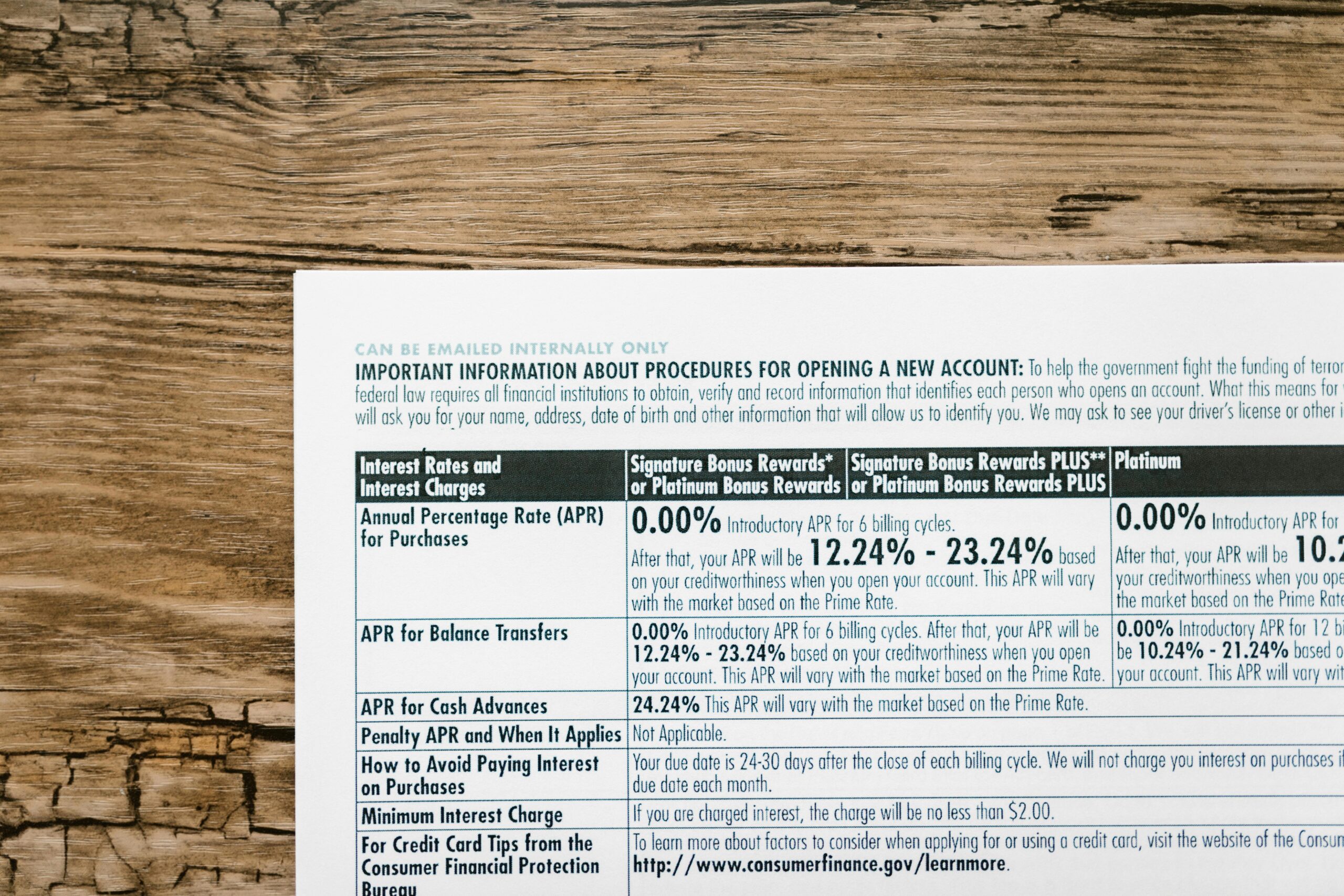
Credit card debt remains one of the most expensive forms of consumer borrowing, with average APRs hovering between 16% and 24% depending on your creditworthiness and card type. What many cardholders fail to realize is that even modest balances can accumulate substantial interest charges over time, turning small purchases into major financial burdens.
The mechanics of credit card interest calculation work against borrowers in subtle ways. Most cards use the average daily balance method, meaning interest accrues every single day you carry a balance. This compounding effect transforms a $5,000 balance at 20% APR into over $1,000 in annual interest charges if you only make minimum payments.
Understanding your effective interest rate is the first step toward optimization. Many consumers focus solely on the stated APR without considering how their payment behavior, balance transfers, and card utilization patterns influence their actual cost of borrowing. The difference between paying strategically and paying haphazardly can literally mean the difference between financial freedom and perpetual debt.
🎯 The APR Optimization Framework: Where to Start
Before implementing any optimization strategy, you need complete visibility into your current credit card situation. Create a comprehensive inventory of every credit card you hold, including the current balance, APR, credit limit, minimum payment, and any promotional rates with expiration dates.
This baseline assessment reveals opportunities that might otherwise remain hidden. You might discover that you’re carrying a balance on a 22% APR card while another card offers a 0% balance transfer promotion. Or you might find that one card charges 18% while another charges 25%, making it clear which balances deserve priority attention.
The optimization framework involves three core components: rate reduction, strategic allocation, and systematic elimination. Rate reduction focuses on lowering your APRs through negotiation, balance transfers, or consolidation. Strategic allocation ensures you’re paying the most expensive debt first. Systematic elimination creates a structured payoff sequence that minimizes total interest paid.
Negotiating Lower APRs: The Overlooked Opportunity
Many cardholders don’t realize that APRs are often negotiable, especially if you have a solid payment history. Credit card companies want to retain profitable customers, and a simple phone call requesting a rate reduction succeeds more often than most people expect.
When contacting your card issuer, approach the conversation with specific information. Mention competing offers you’ve received, reference your payment history, and directly request a specific rate reduction. Frame it as a retention issue rather than a complaint. The representative on the other end has discretionary authority to adjust rates for good customers.
If the first representative declines, politely ask to speak with a supervisor or retention specialist. These departments have broader authority and stronger incentives to keep your business. Even a reduction from 21% to 18% on a $10,000 balance saves you $300 annually, making this 15-minute phone call extraordinarily valuable.
🔄 Balance Transfer Strategies That Actually Work
Balance transfers represent one of the most powerful tools for APR optimization when executed correctly. The typical offer provides 0% APR for 12-18 months with a 3-5% transfer fee, effectively buying you interest-free time to aggressively pay down principal.
The mathematics strongly favor balance transfers for most scenarios. A $10,000 balance at 20% APR costs approximately $2,000 in annual interest. Transferring that balance with a 3% fee ($300) and eliminating it during an 18-month promotional period saves you roughly $2,700 in total interest charges.
However, balance transfer optimization requires careful execution. The promotional period creates a definitive timeline; you must calculate the monthly payment needed to eliminate the entire balance before standard rates apply. Failing to do so often results in deferred interest charges or a return to high APRs with substantial remaining balances.
Avoiding Balance Transfer Pitfalls
Several common mistakes undermine balance transfer effectiveness. First, continuing to use the card for new purchases typically voids the promotional rate and applies payments to the transferred balance first, allowing new purchases to accumulate interest at standard rates.
Second, missing a single payment during the promotional period often triggers penalty APRs of 29.99% or higher, instantly eliminating all benefits. Set up automatic payments for at least the minimum amount to prevent this costly error.
Third, transferring balances without a realistic payoff plan simply postpones the problem. Calculate the exact monthly payment required to eliminate the balance during the promotional window, then commit to that payment as a non-negotiable monthly expense.
📊 Strategic Balance Sequencing: The Debt Avalanche Method
Once you’ve optimized your interest rates, strategic balance sequencing determines the order in which you pay down multiple credit card balances. The mathematically optimal approach prioritizes the highest APR debt first, a strategy known as the debt avalanche method.
Here’s how it works in practice: Make minimum payments on all cards, then direct every additional dollar toward the card with the highest interest rate. Once that balance reaches zero, redirect the entire payment amount to the card with the next highest rate. This approach minimizes total interest paid and typically eliminates debt faster than alternative methods.
Consider this example scenario with three cards:
- Card A: $3,000 balance at 24% APR, $90 minimum payment
- Card B: $5,000 balance at 18% APR, $125 minimum payment
- Card C: $2,000 balance at 15% APR, $60 minimum payment
With $500 available for total credit card payments monthly, the avalanche method directs $275 toward Card A ($90 minimum + $185 extra), while making only minimum payments on Cards B and C. This approach saves hundreds in interest compared to splitting extra payments proportionally across all cards.
The Psychological Alternative: Debt Snowball
While mathematically suboptimal, the debt snowball method prioritizes balances from smallest to largest regardless of interest rate. This approach provides psychological wins through quick eliminations, building momentum that helps some people maintain motivation.
For individuals who struggle with long-term financial commitments or have previously failed to stick with debt repayment plans, the snowball method’s behavioral benefits might outweigh its mathematical inefficiency. The best strategy is the one you’ll actually follow through completion.
Some financial experts recommend a hybrid approach: use the snowball method to eliminate one or two small balances quickly for motivational purposes, then switch to the avalanche method for remaining high-interest debt. This combines psychological wins with mathematical optimization.
💡 Advanced Optimization Techniques
Beyond basic sequencing, several advanced techniques can further reduce your total interest costs. These strategies require more active management but deliver substantial savings for those willing to invest the effort.
Strategic Payment Timing
Credit card interest typically accrues based on your average daily balance throughout the billing cycle. Making payments early in the cycle, or even splitting your monthly payment into two installments, reduces your average daily balance and therefore your interest charges.
For example, if your billing cycle runs from the 1st to the 30th with a $5,000 balance and you plan to make a $500 payment, sending that payment on the 5th rather than the 25th reduces your average daily balance for the month. On a 20% APR card, this timing difference saves approximately $7 monthly, or $84 annually.
Leveraging Credit Card Rewards Strategically
If you’re carrying balances on some cards while still using others for daily purchases, redirect your spending to cards offering the best rewards while maintaining zero balances. Then use those rewards to make additional payments on high-interest debt.
A 2% cash-back card generating $50 monthly in rewards provides an extra $600 annually toward debt reduction. Applied strategically to your highest-rate balance, these rewards accelerate payoff timelines and reduce total interest substantially.
🛠️ Tools and Technology for APR Optimization
Modern financial technology has created numerous tools designed to help consumers manage credit card debt more effectively. Debt payoff calculators, budgeting apps, and credit monitoring services provide the visibility and automation needed for successful optimization.
Debt payoff calculators allow you to model different scenarios, comparing the avalanche versus snowball methods, evaluating balance transfer offers, and determining the impact of increased monthly payments. These tools transform abstract strategies into concrete timelines with specific dollar amounts.
Budgeting applications with debt tracking features provide ongoing visibility into your progress. Many offer visual representations of debt reduction, send reminders before payment due dates, and track your interest savings from optimization efforts. This continuous feedback reinforces positive behaviors and maintains motivation.
Automated Payment Optimization
Setting up strategic automatic payments removes the decision-making burden from monthly debt management. Configure minimum automatic payments on all cards to prevent missed payments, then schedule additional automated transfers to your priority balance on the same day each month.
Some banking apps now offer intelligent automation that analyzes your spending patterns and automatically transfers small amounts to savings or debt payments when you have surplus funds. While these “micro-savings” approaches move small amounts individually, they can contribute meaningfully to debt reduction over time.
📈 Measuring Success and Maintaining Momentum
Tracking specific metrics keeps you accountable and motivated throughout your debt optimization journey. Key indicators include total debt remaining, average APR across all balances, monthly interest charges, and projected debt-free date based on current payment rates.
Create a simple spreadsheet or use a debt tracking app to log these metrics monthly. Watching your total interest charges decrease month-over-month provides tangible evidence of your optimization efforts. Seeing your projected debt-free date move closer delivers powerful psychological reinforcement.
Celebrate meaningful milestones without undermining your progress. When you eliminate a complete balance, acknowledge the achievement, but redirect that payment to the next priority rather than treating it as freed-up spending money. When you cross the halfway point of total debt elimination, recognize the accomplishment while maintaining your payment discipline.
🚫 Common Mistakes That Undermine Optimization
Even well-intentioned optimization efforts can fail due to predictable mistakes. Awareness of these pitfalls helps you avoid them proactively.
The most damaging mistake is continuing to accumulate new debt while attempting to optimize existing balances. If your spending exceeds your income, no optimization strategy will succeed long-term. Address the underlying budget issues before or alongside debt optimization efforts.
Another common error involves closing paid-off credit cards immediately. While emotionally satisfying, closing accounts reduces your total available credit, increasing your credit utilization ratio and potentially lowering your credit score. Keep accounts open but unused, or use them minimally for small recurring charges you pay off immediately.
Failing to adjust your strategy when circumstances change also undermines success. If you receive a raise, increase your debt payments proportionally rather than allowing lifestyle inflation. If an unexpected expense occurs, temporarily reduce extra payments rather than missing minimums or incurring new high-interest debt.
🎓 Building Long-Term Financial Discipline
APR optimization and strategic balance sequencing are short-term tactics within a broader framework of financial health. The ultimate goal extends beyond eliminating current debt to preventing future accumulation through improved spending habits and emergency preparedness.
As you progress through debt elimination, simultaneously build an emergency fund covering at least one month of expenses. This buffer prevents future emergencies from forcing new high-interest borrowing. Once you achieve this initial fund, continue building toward three to six months of expenses.
Develop spending awareness that prevents lifestyle inflation from consuming income increases. When you eliminate a debt payment, resist the temptation to redirect those funds to discretionary spending. Instead, allocate freed-up payments to savings, investments, or accelerating remaining debt elimination.
🔑 Taking Action: Your 30-Day Optimization Plan
Knowledge without action generates no results. Transform these strategies into concrete progress with a structured 30-day implementation plan.
Week one focuses on assessment and planning. Compile your complete credit card inventory with all relevant details. Calculate your current average APR and total monthly interest charges. Identify your highest-rate debt and determine your target monthly payment for that balance.
Week two involves rate optimization. Contact each credit card issuer requesting APR reductions. Research balance transfer offers that might benefit your situation. Calculate the savings potential from each opportunity and prioritize the highest-impact actions.
Week three centers on execution. Submit balance transfer applications if beneficial. Set up automatic payments for minimums on all cards plus additional payments toward your priority balance. Download and configure a debt tracking tool.
Week four establishes ongoing systems. Create your monthly review routine for checking progress and adjusting as needed. Identify spending categories where you can redirect funds toward debt payments. Set specific milestones with projected dates and planned celebrations.
💰 The Compound Benefits of Strategic Debt Management
The financial benefits of APR optimization and strategic sequencing extend far beyond immediate interest savings. Successfully eliminating high-interest debt improves your credit score, reduces financial stress, and frees up monthly cash flow for wealth-building activities.
A higher credit score resulting from lower utilization ratios and consistent payments unlocks better rates on future borrowing needs like mortgages and auto loans. The difference between a 4% and 5% mortgage rate on a $300,000 home costs approximately $60,000 over the loan’s lifetime.
Beyond dollars, the psychological and relationship benefits prove equally valuable. Financial stress ranks among the leading causes of anxiety and relationship conflict. Demonstrating control over debt through strategic management reduces this stress and often improves overall life satisfaction.
The discipline developed through successful debt optimization transfers to other financial areas. People who methodically eliminate credit card debt typically develop stronger budgeting habits, increased savings rates, and more thoughtful spending patterns that compound into substantial wealth differences over decades.
Your financial future isn’t determined by past mistakes or current balances, but by the strategic decisions you make starting today. APR optimization and balance sequencing provide the roadmap; your consistent execution determines the destination. Begin with the assessment phase immediately, implement your first optimization within 48 hours, and maintain disciplined execution until you achieve complete elimination. The transformation from debt burden to financial freedom starts with a single strategic action taken right now.
